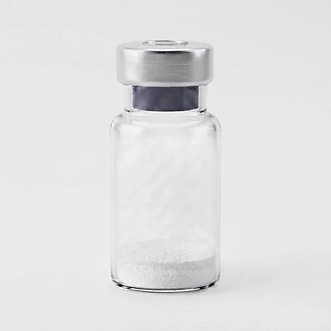
MOTS-C
LC-MOTS-10 · 10mg vial
Mitochondrial-derived peptide of 16 residues that regulates metabolic homeostasis and AMPK activation in skeletal muscle models.
Purity
99%
Availability
In Stock
$45.00
- Molecular Formula
- C101H152N28O22S2
- Molecular Weight
- 2174.53 g/mol
- Sequence
- MRWQEMGYIFYPRKLR
- Half-Life
- ~30 min
- Physical Form
- Lyophilized powder
- Storage
- -20°C lyophilized; 2-8°C reconstituted
- Purity (HPLC)
- 99%
- SKU
- LC-MOTS-10
Research Dossier
MOTS-C — Preclinical Profile
A plain-language mechanism of action and a general laboratory research protocol — compiled from published research literature.
For laboratory research only. The information below summarizes published research literature and is provided for reference by qualified laboratory personnel. It is not medical advice and makes no therapeutic claims. These products are not for human or veterinary use, diagnosis, or treatment, and have not been evaluated by the FDA.
Mechanism of Action
MOTS-c functions as a cellular messenger that helps regulate how cells produce and use energy. It travels from the mitochondria to the nucleus to signal changes in gene expression during metabolic stress. This interaction helps the cell maintain a healthy balance of nutrients and energy production.
Primary Research Areas
Clinical Research Applications
Insulin Sensitivity
Clinical research is investigating the peptide's influence on glucose regulation and insulin response in adults categorized as overweight or having prediabetes.
Hepatic Steatosis
Investigators are evaluating the peptide's role in metabolic pathways associated with fat accumulation in the liver during Phase I clinical trials.
Skeletal Muscle Aging
Research is exploring how endogenous levels of the peptide correlate with muscle fiber types and physical quality in aging populations.
Metabolic Biomarkers
Studies are examining the relationship between circulating peptide concentrations and clinical markers such as HbA1c, fasting insulin, and body mass index.
Cellular Senescence
Clinical investigators are studying the peptide's potential to modulate markers of cellular aging and inflammatory cytokine production in various tissues.
The applications above describe areas of ongoing clinical investigation reported in the research literature. They are not indications of approved use, efficacy, or safety, and do not constitute medical or therapeutic claims.
Laboratory Research Protocol
Reconstitution
Reconstitute the lyophilized powder using sterile bacteriostatic water or phosphate-buffered saline (PBS) to the desired concentration for in-vitro use.
Storage
Store the lyophilized vial at -20°C. Once reconstituted, the solution should be aliquoted and stored at -20°C or -80°C to avoid repeated freeze-thaw cycles.
In-vitro reference range
Published in-vitro assays often utilize concentrations ranging from 10 µM to 100 µM in cell lines such as HEK293 or skeletal muscle cells.
Handling notes
Handle under sterile conditions; the peptide is sensitive to temperature fluctuations and should be kept on ice during active laboratory procedures.
Concentration ranges reflect values reported in published in-vitro assays and are provided as a literature reference only — not a dosing regimen for use in any organism.
Selected References
- 01Mitochondria-derived peptide MOTS-c: effects and mechanisms related to stress, metabolism and aging — https://pmc.ncbi.nlm.nih.gov/articles/PMC9854231/
- 02The Mitochondrial-Derived Peptide MOTS-c Promotes Metabolic Homeostasis and Reduces Obesity and Insulin Resistance — https://www.sciencedirect.com/science/article/pii/S1550413115000613
- 03MOTS-c for Improving Insulin Sensitivity in Adults With Prediabetes and Overweight/Obesity — https://clinicaltrials.gov/study/NCT07505745
- 04Increased expression of the mitochondrial derived peptide, MOTS-c, in skeletal muscle of healthy aging men — https://pmc.ncbi.nlm.nih.gov/articles/PMC7138593/
Compliance Statement
This product is supplied strictly for IN-VITRO LABORATORY RESEARCH ONLY. It is NOT a drug, supplement, food, or cosmetic, and is NOT intended for human or veterinary consumption, diagnosis, or treatment. Not evaluated by the FDA.