Tesamorelin
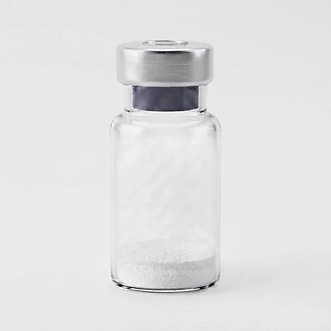
LC-TESA-10 · 10mg vial
Synthetic analog of growth hormone-releasing hormone (GHRH) studied for its effects on visceral adiposity and somatotrope signaling.
Purity
99%
Availability
In Stock
$60.00
- Molecular Formula
- C221H366N72O67S
- Molecular Weight
- 5135.86 g/mol
- Sequence
- trans-3-Hexenoyl-Tyr-Ala-Asp-Ala-Ile-Phe-Thr-Asn-Ser-Tyr-Arg-Lys-Val-Leu-Gly-Gln-Leu-Ser-Ala-Arg-Lys-Leu-Leu-Gln-Asp-Ile-Met-Ser-Arg-Gln-Gln-Gly-Glu-Ser-Asn-Gln-Glu-Arg-Gly-Ala-Arg-Ala-Arg-Leu-NH2
- Half-Life
- ~2 hrs
- Physical Form
- Lyophilized powder
- Storage
- -20°C, protect from light
- Purity (HPLC)
- 99%
- SKU
- LC-TESA-10
Research Dossier
Tesamorelin — Preclinical Profile
A plain-language mechanism of action and a general laboratory research protocol — compiled from published research literature.
For laboratory research only. The information below summarizes published research literature and is provided for reference by qualified laboratory personnel. It is not medical advice and makes no therapeutic claims. These products are not for human or veterinary use, diagnosis, or treatment, and have not been evaluated by the FDA.
Mechanism of Action
Tesamorelin is a synthetic analogue of growth hormone-releasing hormone that binds to specific receptors on the anterior pituitary gland. This interaction stimulates the synthesis and pulsatile release of endogenous growth hormone. By mimicking the natural hormone, it modulates the growth hormone axis and influences downstream metabolic processes.
Primary Research Areas
Clinical Research Applications
HIV-associated lipodystrophy
Clinical research is investigating the impact of the peptide on the reduction of excess visceral adipose tissue in populations with HIV-associated fat accumulation.
Metabolic-associated steatotic liver disease (MASLD)
Clinical research is exploring the potential for the peptide to influence hepatic fat fraction and liver enzyme levels in adults with non-alcoholic fatty liver conditions.
Physical function and muscle health
Ongoing clinical investigations are evaluating whether the peptide, when combined with exercise, may influence physical function and muscle composition in specific adult populations.
Endocrine function and IGF-1 signaling
Clinical research is examining the modulation of serum insulin-like growth factor-1 (IGF-1) levels and its relationship to metabolic outcomes.
The applications above describe areas of ongoing clinical investigation reported in the research literature. They are not indications of approved use, efficacy, or safety, and do not constitute medical or therapeutic claims.
Laboratory Research Protocol
Reconstitution
Reconstitute the lyophilized powder in sterile water for injection or bacteriostatic water to a concentration of 1 mg/mL, followed by further dilution in an appropriate aqueous buffer for specific assay requirements.
Storage
Store the reconstituted solution under refrigerated conditions (typically 2-8 degrees Celsius) and follow specific stability guidelines provided by the lot-specific Certificate of Analysis.
In-vitro reference range
Typical in-vitro working concentrations reported in literature range from 0.1 to 1 mg/mL (approximately 19.5–195 nM) for pituitary-cell stimulation and receptor binding assays.
Handling notes
The peptide contains a trans-3-hexenoic acid group at the N-terminus, which provides resistance to dipeptidyl peptidase-IV (DPP-IV) cleavage. Always confirm lot-specific purity and endotoxin levels via the Certificate of Analysis before use in sensitive cell systems.
Concentration ranges reflect values reported in published in-vitro assays and are provided as a literature reference only — not a dosing regimen for use in any organism.
Selected References
- 01Tesamorelin - LiverTox - NCBI Bookshelf — https://www.ncbi.nlm.nih.gov/books/NBK548730/
- 02The Growth Hormone Releasing Hormone Analogue, Tesamorelin, Decreases Muscle Fat and Increases Muscle Area in Adults with HIV — https://pmc.ncbi.nlm.nih.gov/articles/PMC6766405/
- 03Metabolic Effects of a Growth Hormone–Releasing Factor in Patients with HIV — https://nejm.org/doi/full/10.1056/NEJMoa072375
- 04Tesamorelin: Exploring the Research Potential of a Growth Hormone-Releasing Peptide — https://www.biospace.com/press-releases/tesamorelin-exploring-the-research-potential-of-a-growth-hormone-releasing-peptide
Compliance Statement
This product is supplied strictly for IN-VITRO LABORATORY RESEARCH ONLY. It is not a drug, supplement, food, or cosmetic, and is not intended for human or veterinary consumption, diagnosis, or treatment. It has not been evaluated by the FDA.