
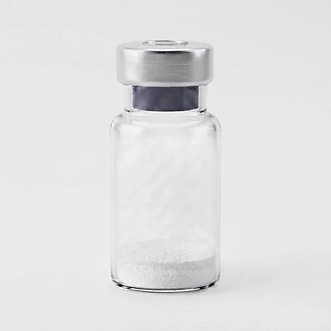
CJC-1295 (NO DAC) + Ipamorelin
LC-CJCIPA-10 · 10mg vial (5mg + 5mg)
Combination of the GHRH analog CJC-1295 (without DAC) and the selective ghrelin-mimetic ipamorelin, studied for synergistic growth-hormone release.
Purity
99%
Availability
In Stock
$45.00
- Molecular Formula
- C152H252N44O42 / C38H49N9O5
- Molecular Weight
- 3367.2 g/mol / 711.86 g/mol
- Sequence
- Tyr-Ala-Asp-Ala-Ile-Phe-Thr-Gln-Ser-Tyr-Arg-Lys-Val-Leu / Aib-His-D-2-Nal-D-Phe-Lys-NH2
- Half-Life
- ~30 min (CJC) / ~2 hrs (IPA)
- Physical Form
- Lyophilized blend
- Storage
- -20°C, protect from light
- Purity (HPLC)
- 99%
- SKU
- LC-CJCIPA-10
Research Dossier
CJC-1295 (NO DAC) + Ipamorelin — Preclinical Profile
A plain-language mechanism of action and a general laboratory research protocol — compiled from published research literature.
For laboratory research only. The information below summarizes published research literature and is provided for reference by qualified laboratory personnel. It is not medical advice and makes no therapeutic claims. These products are not for human or veterinary use, diagnosis, or treatment, and have not been evaluated by the FDA.
Mechanism of Action
CJC-1295 (No DAC) acts as a growth hormone-releasing hormone analog that binds to specific receptors to stimulate the release of growth hormone. Ipamorelin functions as a selective ghrelin receptor agonist, which works in tandem to promote pulsatile growth hormone secretion. Together, these compounds are studied for their ability to modulate the growth hormone-IGF-1 axis through complementary signaling pathways.
Primary Research Areas
Clinical Research Applications
Growth hormone secretion dynamics
Clinical research is exploring how the combination of these peptides influences the magnitude and frequency of growth hormone pulses in controlled settings.
Metabolic function investigation
Studies are evaluating the role of growth hormone modulation in pathways related to fat oxidation and lean tissue markers.
Endocrine feedback mechanisms
Investigations are examining whether sustained stimulation of the growth hormone axis leads to receptor desensitization or feedback suppression.
Recovery and tissue repair pathways
Research is assessing the impact of growth hormone secretagogues on markers associated with cellular recovery and tissue maintenance.
The applications above describe areas of ongoing clinical investigation reported in the research literature. They are not indications of approved use, efficacy, or safety, and do not constitute medical or therapeutic claims.
Laboratory Research Protocol
Reconstitution
Reconstitute the lyophilized powder using sterile bacteriostatic water, adding the solvent slowly down the side of the vial to avoid agitation of the peptide structure.
Storage
Store the reconstituted solution in a refrigerated environment (2-8 degrees Celsius) and use within the timeframe specified by the manufacturer's stability data, typically avoiding repeated freeze-thaw cycles.
In-vitro reference range
Published in-vitro assays typically utilize concentration ranges in the nanomolar (nM) to micromolar (uM) scale to observe receptor activation and hormone release kinetics.
Handling notes
Handle in a controlled laboratory environment using aseptic techniques. Ensure the vial is kept away from direct light and heat to maintain chemical integrity.
Concentration ranges reflect values reported in published in-vitro assays and are provided as a literature reference only — not a dosing regimen for use in any organism.
Selected References
- 01Prolonged stimulation of growth hormone (GH) and insulin-like growth factor-I (IGF-I) by CJC-1295, a long-acting GHRH analog — PubMed (Teichman et al., 2006)
- 02CJC-1295 (No DAC) + Ipamorelin: Mechanism, Effects & Research Studies — Peptpedia
- 03CJC-1295 vs Ipamorelin vs Sermorelin 2026: Full Comparison — Baltic BioLabs
Compliance Statement
This product is supplied strictly for in-vitro laboratory research only. It is not a drug, supplement, food, or cosmetic, and is not intended for human or veterinary consumption, diagnosis, or treatment. It has not been evaluated by the FDA.