
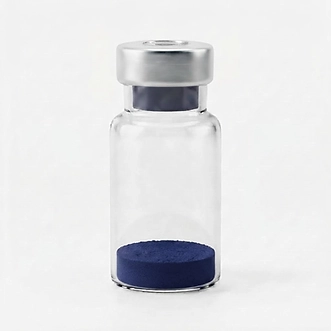
GHK-Cu (Copper Peptide)
LC-GHKCU-50 · 50mg vial
Copper-binding glycyl-L-histidyl-L-lysine complex studied for its role in tissue remodeling, collagen synthesis, and extracellular matrix regulation.
Purity
99%
Availability
In Stock
$40.00
- Molecular Formula
- C14H24CuN6O4
- Molecular Weight
- 741.33 g/mol
- Sequence
- Gly-His-Lys · Cu2+
- Half-Life
- ~30 min
- Physical Form
- Lyophilized powder
- Storage
- -20°C lyophilized; 2-8°C reconstituted
- Purity (HPLC)
- 99%
- SKU
- LC-GHKCU-50
Research Dossier
GHK-Cu (Copper Peptide) — Preclinical Profile
A plain-language mechanism of action and a general laboratory research protocol — compiled from published research literature.
For laboratory research only. The information below summarizes published research literature and is provided for reference by qualified laboratory personnel. It is not medical advice and makes no therapeutic claims. These products are not for human or veterinary use, diagnosis, or treatment, and have not been evaluated by the FDA.
Mechanism of Action
GHK-Cu acts as a carrier that delivers copper ions into cells to support essential biological functions. It helps regulate the environment surrounding cells by balancing the breakdown of old structural proteins and the production of new ones. This interaction supports the natural maintenance and repair processes of various tissues.
Primary Research Areas
Clinical Research Applications
Dermatological Aging
Clinical research is investigating the peptide's impact on skin elasticity, collagen density, and the appearance of fine lines in aging skin.
Wound Healing
Investigators are exploring how the peptide influences the biological pathways involved in the repair and remodeling of acute skin injuries.
Hair Follicle Biology
Research is evaluating the peptide's effect on hair follicle size and the activity of stem cells within the scalp environment.
Neuroprotective Signaling
Clinical studies are examining the peptide's ability to modulate gene expression patterns associated with the maintenance and protection of neuronal tissues.
Pulmonary Fibroblast Function
Research is investigating the peptide's role in modulating the activity of lung fibroblasts and its potential influence on tissue integrity.
The applications above describe areas of ongoing clinical investigation reported in the research literature. They are not indications of approved use, efficacy, or safety, and do not constitute medical or therapeutic claims.
Laboratory Research Protocol
Reconstitution
Reconstitute the lyophilized powder using sterile phosphate-buffered saline (PBS) or sterile water for injection.
Storage
Store the lyophilized vial at -20°C. Once reconstituted, store in sterile aliquots at 4°C for immediate use or -80°C for long-term stability to avoid repeated freeze-thaw cycles.
In-vitro reference range
Typical concentrations in published cell culture studies range from 1 nM to 10 µM (Pickart et al., 2015, PMC4508379).
Handling notes
The copper-peptide complex is sensitive to pH changes; avoid mixing with strong acids or high concentrations of ascorbic acid which may cause dissociation of the copper ion.
Concentration ranges reflect values reported in published in-vitro assays and are provided as a literature reference only — not a dosing regimen for use in any organism.
Selected References
- 01Regenerative and Protective Actions of the GHK-Cu Peptide in the Light of the New Gene Data — https://pmc.ncbi.nlm.nih.gov/articles/PMC6073405/
- 02GHK Peptide as a Natural Modulator of Multiple Cellular Pathways in Skin Regeneration — https://pmc.ncbi.nlm.nih.gov/articles/PMC4508379/
- 03The Human Tripeptide GHK-Cu in Prevention of Oxidative Stress and Degenerative Conditions of Aging: Implications for Cognitive Health — https://pmc.ncbi.nlm.nih.gov/articles/PMC3359723/
Compliance Statement
For laboratory research only, not for human/veterinary use, not evaluated by FDA